

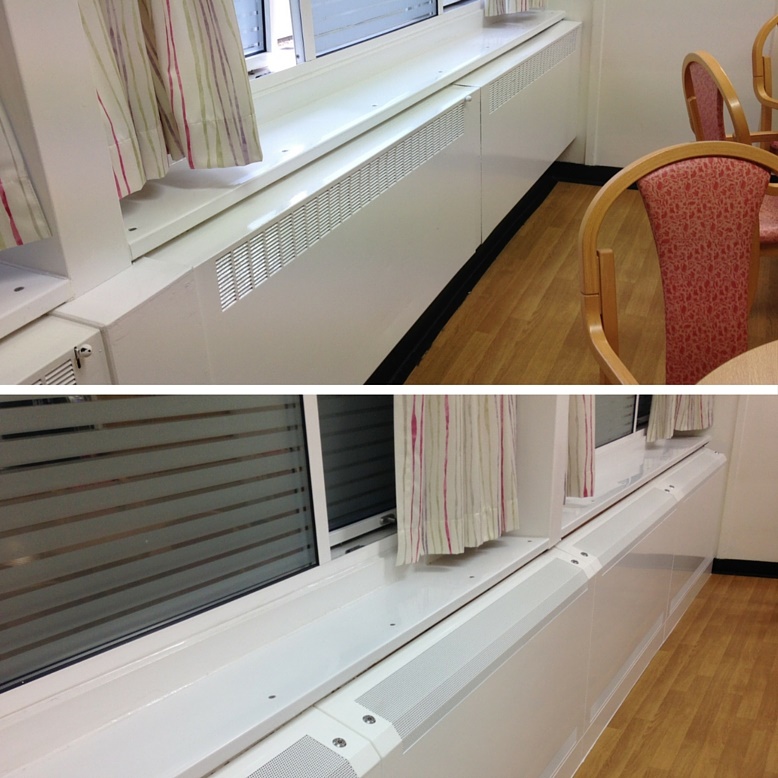
We have just completed the design, manufacture, removal and installation of 46-off anti-ligature radiator guards for an award winning mental health trust. Over 80 sections of guards had to be installed to cover the old perimeter heating system. Many of the guards exceeded 6m in length, and had to be accurately measured to fit perfectly between walls.
The old perimeter casings having been installed for over 20 years, had served their purpose but were no longer suitable for the environment. The fixed panels had meant that only maintenance staff could remove the guards, and clean. Over the years many of the panels had become damaged, and became loose with missing parts meaning these were potential items to injure service users or staff.
The perimeter heating guards due to being wall mounted left the underside open, creating another potential risk to service users. The large outlet grilles can also serve as a ligature point to vulnerable mental health service users.
Top 10 tips for specifying anti-ligature radiator guards
- Ensure grill openings reduce the risk of grilles being used as a ligature point.
- Provide quick access security locks, and simple opening systems so that domestic staff can conduct cleaning without maintenance staff.
- Where clear wall space exists above the top of the radiator, provide a sloping top guard to prevent the top of the guard being used as a ledge or place to sit on.
- Use the minimal amount of components in the guard construction, ensuring small pieces can’t be broken off and used as a weapon.
- Provide smoothed corners, reducing the impact from falls against radiator guards.
- Ensure fixings are hidden, preventing service users the opportunity to remove guards.
- Provide guards that look cosmetically pleasing, avoid guards that look institutional.
- Ensure heating components are fully enclosed, not leaving hot surfaces exposed.
- To achieve the most efficient output, ensure top grilles follow the full guard profile. Do not have solid sections at the front top of the guard, as heat becomes trapped.
- Ensure all gaps are minimised preventing further ligature points.